Search This Blog

Wednesday, September 1, 2010

Commitment to your Teammates


From Bill Bradley's book Values of the Game:

There is an extra dimension to the respect that exists among teammates-a respect beyond that accorded the rules, the coach, and the opponent. Teammates on a team that wins will never be strangers. Teammates on a team that wins the state tournament in high school, or the conference championship in college, will forever be bound by their mutual achievement. In the pros, from exhibitions to playoffs, a team plays more that a hundred games a season. Players often have four games in five nights in four different cities. By late February, fatigue is the common enemy. Often there's not enough time for sufficient rest even if a player manages his day wisely-yet each night he has to go out and push hard to win. Dave DeBusschere, his face drawn from the long season, and Willis Reed, with his brow furrowed and heating packs on each knee, used to look over at each other in the locker room of the fourth town in five days, and their glances alone seemed to say, "I'm tired to my bones-I don't want to go out there. But if you do it, I will too."

Out of this kind of team commitment comes a deep respect. After a game, each man knows that everyone has given his all. It's an honest and open relationship; there's no suppressed anger because someone didn't set a screen, or rebound, or hustle on defense, but instead the assured knowledge that on that night the team went as far as its collective abilities permitted. If the outcome is a loss, the attitude is that we lost because we were beaten, not because we didn't extend ourselves fully. The conviction that each man did his best is unshaken.


Monday, August 30, 2010

Character and Work Ethic

Quote from Kansas City GM Scott Pioli. I think this applies to all sports:

“Here is what happens in this game: As we all know, there are good times and bad times,” Pioli said. “In bad times, you have to be able to have people that you can depend on, rely upon, that instead of jumping off the ship, they are going to try to find a way to rally together. The more successful teams that I have been a part of in high school, college or professional football, the most successful teams at their core had a lot of people with strong football character and strong work ethics.”

Sunday, August 29, 2010

Slapping Pride in the Face

“I could say I want to go for that 10th Gold Glove. … But sometimes you’ve got to slap pride in the face and all that individual stuff – the Gold Glove stuff – you can let that go. All I care about is winning. … If this makes the team better, I’m going to do it.”

-All-Star Torii Hunter on moving from CF to RF in order for the Angels to bring up a minor league prospect.

Thursday, August 26, 2010

It goes back to the process

Good article on ESPN.com about the structure that new FSU head coach Jimbo Fisher has installed into his program.

Fisher said the most important thing he wanted to change was the team's attitude.

"It goes back to the process," he said. "If we want to win, what are we doing to prepare to win? How are we preparing our bodies, how are we preparing our minds? How are we preparing to be a teammate and understanding what being a teammate is? If those things take place, the big things come. We have talented players. Do we have the most? I don't know that, but I don't think we have the least. I think we know we're pretty good. Getting the mind right, and getting them to understand and care for each other and take ownership of each other, that's crucial."

From quarterback Christian Ponder:

"A lot of people are going to be surprised by the way we look once the season starts," Ponder said. "A lot of people have changed their bodies. We've always had the talent to win games, and we have the talent still, it's just the small details that needed to be changed. That's what this whole process has been that Coach Fisher has brought."

Tuesday, August 24, 2010

Kevin Eastman’s 4 Whats to Create Value

1.What does my team need most (offensively, defensively, in the locker room, etc)?

2.What things am I good at that I can become great at AND meet my team’s greatest needs?

3.What are the little, nameless, oft unnoticed acts that I can do, that no ones wants to do – between the lines and outside the lines?

4.What things should I avoid – both on and off the court? (What things should I add to my stop-doing list as a basketball player, teammate or person?)

Thursday, August 19, 2010

Character Counts

Here is an article in the USA Today about 49ers QB Alex Smith and the adversity that he has overcome since being drafted with the #1 overall pick in the 2005 NFL Draft.
Here is what head coach Mike Singletary says:
"The next step is that leadership," says 49ers coach Mike Singletary, mindful of the morale-boosting effect of performance. "Being able to take an offense that might be stuck at some point in the game and being able to rally those guys together into believing in what we're going to get done."
Asked why he ultimately settled on Smith, Singletary said, "I believe in him. It's just as simple as that. He'd been through hell, but he's never complained. He's stood up against all obstacles and in my mind has overcome them.
"I'll go with character, and we'll go from there."

100 % 'In'

From Kevin Eastman:

Been thinking about areas where your players, your staff, and anyone associated with your group have to be 100% "in." There's no room for partial involvement when it comes to any of these areas:

1. Trust
2. Loyalty
3. Commitment
4. Truthfulness

Wednesday, August 18, 2010

The Butler Way


1. Humility - know who we are, strengths and weaknesses

2. Passion - do not be lukewarm, commit to excellence

3. Unity - do not divide our house, team first

4. Servanthood - make teammates better, lead by giving

5. Thankfulness - learn from every circumstance

Tuesday, August 17, 2010

Sunday, August 15, 2010

Shanahan Brings Discipline to Redskins


Article in the New York Times on the structure that new Redskins coach has brought to the team. Here is an excerpt:

The Redskins were so mired in chaos that linebacker London Fletcher called it the worst season of his 12 years in the N.F.L., even though he played for a 4-12 team his rookie year in St. Louis. Players were late to meetings, ignored treatment appointments and did not study. The coach’s authority was publicly undermined by the front office, and a dreadful season ensued. The Redskins finished 4-12, including a loss to the Detroit Lions, despite an easy schedule.

“Last year, by Week 4 or 5, I’m thinking: My goodness, I still have 11 weeks of this? This is awful,” Fletcher said. “It can take the life out of you. You got 40 to 45 doing it the right way and 8 not doing what they’re supposed to do, but those 8 guys you’re depending on on Sunday. The trust factor is not there.

“Seemed like every week was something new that we were creating, some kind of situation and distraction. It made it tough to come to work. We were defeating ourselves on Wednesday, before we even had the chance to play the game.”

Fletcher added: “The inmates were running the asylum. That has changed. You definitely know he’s in charge.”


Friday, August 13, 2010

Heels' freshman Harrison Barnes a leader in the making


Great article from the Charlotte Observer on the work ethic and leadership qualities of high touted North Carolina recruit Harrison Barnes:

North Carolina freshman Harrison Barnes was practicing moves at the Smith Center on July 3 when he spotted strength and conditioning coach Jonas Sahratian.

“So, are we going to do a workout tomorrow?” the top incoming recruit in the nation asked.

The next day – a holiday Sunday – the 6-foot-8 wing completed his 9 a.m. solo session with Sahratian with a similar question: “What time tomorrow?”

“Then the next morning, he comes in at 8:30 a.m … with Kendall [Marshall], Will Graves and Dexter Strickland,” Sahratian remembered. “I said, ‘I thought you were coming by yourself.’ He said, ‘I can’t do it all alone.’

“Right then I said, ‘OK, we’re going to be all right.’ ”

Barnes – projected as the No. 1 overall NBA pick next summer in several mock drafts – is already known for his smooth outside shot, athletic rebounding, and honed court smarts. But the Iowa native also boasts an intangible quality that might be even more important as the Tar Heels try to ricochet from the worst season in the Roy Williams era: leadership.

One of the things Williams lamented about last season’s freefall – when the reigning national champions finished 5-11 in the ACC, failed to make the NCAA tournament and only managed to win 20 games because of an NIT run – was his team’s failure to consistently work hard.

He won’t have that problem with Barnes, whose summer session dorm room boasted a pile of basketball books but no TV; who can be found working on his dribbling skills in the weight room if the court is taken; and who has become a pied piper, of sorts, when it comes to working out.

“[Coach Williams] is not going to call him a leader, because he’s a freshman,” said Strickland, a sophomore guard. “But actions speak louder than words. You don’t have to say anything, you can play, you can work out, you can set an example – and the way you present yourself can make you be a leader, alone.”

Competitive youth

Barnes has been showing those leadership qualities for years. Off the court, he was an honor roll student through high school who plans to major in business administration at UNC while, he has said, pushing for the top GPA on the team. He played soccer and the cello as a youth and still occasionally dabbles on the saxophone.

As the son of former Iowa State basketball player Ronnie Harris, who left the family when Barnes was young, basketball has always been a part of his life. But he has often credited his mom, Shirley – who works in the department of music at Iowa State, and raised him and his sister alone – for instilling his love of the game. And for keeping him humble and cementing his focus. Efforts to reach her were unsuccessful.

Team rules prohibit UNC freshmen from talking to the media once they reach campus, until after they play in their first game.

But Vance Downs, Barnes’ coach at Ames (Iowa) High, said of the player’s mother: “She’s very driven. And I’m not sure she sleeps – she’s the type of person that’s always doing so much, I wonder if she ever goes to bed. … Without a doubt, she’s unbelievably strong, and she’s instilled that work ethic in Harrison.”

It showed early on.

Barnes’ fifth-grade coach, Jafar Azmayesh, sensed the player’s maturity the first time they met.
“That first day, we showed up to nine 10-year-olds standing there for practice, their behavior, their actions, how they carried themselves, were all on par with what 10-year-olds do,”

Azmayesh told the Iowa State Daily. “Except Harrison was more like a 17- or 18-year-old.”

His competitive spirit only grew as he did, as he worked to be the best at everything – be it eating the most spaghetti at dinner with friends or burying the most free throws at practice.

With Harrison, the simplest drill becomes a cutthroat experience,” Downs said. “It just spreads, everybody becomes challenged. And the team gets better.”

Now, fans are hoping that carries over at UNC, as well.

In just the couple of months Barnes has been in Chapel Hill, sophomore John Henson said, teammates have seen him staying after pick-up games to shoot – and they stay, too.

Roommates hear him getting up early to work out, and they do, too.

His drive is so tangible that it has drawn comparisons to Tyler Hansbrough, UNC’s all-time leading scorer who helped the Tar Heels surpass expectations his freshman season in 2005-06, and ultimately pushed them to the 2009 national title.

“He is the high school version of Tyler in some ways, because he’s the most focused high school player I’ve ever recruited, the most disciplined high school player I’ve ever recruited,” Williams said. “Tyler was that way and took it to another two or three levels after he got here.”

A ‘workaholic’

Now the question is: Will Barnes do the same?

Like Hansbrough in 2005, the 205-pound wing joins a team with question marks. But unlike Hansbrough in 2005, he’s been dubbed the preseason savior – something Williams thinks is far from fair.

The coach has insisted he doesn’t need Barnes to be the team’s leader. Instead, “I need him to play his rear end off.” But asked if a freshman can lead, he gave two prime examples. There was Jacque Vaughn at Kansas, to whom “everybody listened, and if Jacque said it was sunshiny – and it could be raining like crap – 13 people believed the sun was shining.” And there was Hansbrough, who didn’t talk much early on, but set an example by scoring 40 points against Georgia Tech his freshman season and outworking everyone in the weight room.

“That’s the reason he was a good leader,” Williams said, “because people watched him and said, ‘He’s pretty good, we’d better play ourselves.’ ”

Sound familiar?

“[Harrison] is a workaholic, he wants to get better, and that factor alone drives me,” Strickland said. “His work ethic alone should motivate everyone on the team – not, ‘I want to be as good,’ but ‘I want to be better [than him].’ So I look at it as a motivation tool. … And hopefully, it will make all of us better.”

Barnes, who joins point guard Kendall Marshall and Reggie Bullock in a star-studded recruiting class, is expected to start – and put up impressive numbers from the outset. But it’s the tone he is setting off the court now that could impact UNC’s season the most.
D

owns, his high school coach, likes to tell the story of the time that, as a 14-year-old freshman, Barnes phoned, begging to use the team’s weight room – even though Downs had given the team a week off for spring break.

“Coach,” Barnes told him, “we aren’t going to win state championships by taking a week off.”
So Barnes didn’t take the week off. And he went on to score a school record 1,787 points, and help the Little Cyclones win back-to-back titles, before he graduated.

Tuesday, August 10, 2010

Singletary just might have saved Vernon Davis.

Saw an article from Peter King of Sports Illustrated talking about the transformation of 49ers TE Vernon Davis from a selfish me-first player to a team captain. Two years ago head coach Mike Singletary kicked Davis out of a game after receiving several penalties in what Singletary saw as selfish acts.

Here is a good video of the incident and the transformation that has taken place from nfl.com

Here is the article from King:

Always wanted to ask one of the best young tight ends in the game how he felt about being shown up/embarrassed/clapped in the face by his new coach, Mike Singletary, a couple of years ago.

You remember Singletary banishing Vernon Davis from the sidelines during a game after a thoughtless Davis penalty, ordering him to the locker room and not to return.

"Best thing that ever happened to me in my life,'' Davis told me. "Woke me up. I was all about Vernon, not about the team.''

Davis also revealed Singletary told him if he wanted to fight, that was fine with him. They'd fight. "He pushed me to the edge,'' said Davis. "I needed that. When you're a first-round pick, and everyone's telling you how great you are, sometimes you need a guy to tell you that football's a team game. Here he is, one of the greatest players ever. So I had to change. Now, I'm all in.''

Davis caught 103 balls in his first three seasons, including that troubled third year, with nine touchdowns. Last year, he caught 78 passes with 13 touchdowns, most in the league for a tight end. When I asked Singletary about Davis, he smiled. "One of the most misconstrued guys in the league,'' Singletary said. "He raises the level in practice every day. He raises the work ethic. He's done everything I've asked.

Monday, August 9, 2010

The 5 Core Concerns of Every Teammate


From the Academy of Sports Leadership. Thanks to Scott Shepard at HoopSource for sending this out.


Dear Team Captain:

As a team leader your task is to evoke excellence in others. Great leaders are eager to help someone else improve at what he or she wants to do. The key question you should ask on a daily basis is "How do I contribute to a teammate's competence in a respectful, dignified, and effective way." The answers will help you become an effective team leader.

Here are five core concerns that you should be aware of as you work to build respectful relationships with your teammates.

Concern #1: Appreciation: Every member of your team wants to know that their thoughts, feelings, and actions are valued by the coaches and teammates. Everyone on the team puts in a tremendous amount of time and energy to achieve shared goals. Try to find ways to show your teammates appreciation for their commitment to the team. Encourage teammates to demonstrate appreciation for each other.

Concern #2: Association: Your teammates wants to be treated as an integral part of something meaningful. They want to be valued by teammates and not excluded from team functions away from the playing field. That is, each student-athlete will make a deeper commitment to the team when they feel a strong sense of association.

Unfortunately, sport teams all too often breed an in-group out-group mentality. Injuries too can seem alienating to team members. When teammates can't participate because of injuries be sure to keep them close to you and the rest of the team.

Concern #3: Self-Management: Student-athletes want to be respected for their ability to make decisions in their best interest. Most of your teammates will possess a desire to be self-directing. However, this does not mean they don't want your help. It just means you need to help them set their direction and stay on course.

Concern #4: Status: Every team member is concerned with his or her status on the team and their "relative position" to teammates. Bench players, in particular, want to be given recognition and not to be treated as inferior to others. While it is generally evident who the best players are on the playing field, the contributions others make in the various roles should not be relegated to second-class status by you and your teammates.

Concern #5: Role: Each of your teammates desires a role to play and truly wants that role to be fulfilling. It's common for athletes to perceive their role in an ambiguous way. Through patience your guidance can help teammates understand, accept, and grow in their respective role. You can point the way by helping teammates make sense of their role on and off the playing field. Your teammates will be seeking and serving in a variety of roles throughout the season. Some more vital than others. Always pay attention to your teammates and help them to find value in their role.

In summary, each teammate will have a different perception of how his or her 5 Core Concerns are being met. Perceptions should be visible in their various behaviors, attitudes, emotional reactions and thought patterns. Your leadership task is to continually work at identifying underlying problems and find solutions. This is best done when you actively engage in honest conversation with your teammates building solid relationships. Great leaders care to know their teammates.

Sunday, August 8, 2010

Coaching tips from the Nike camps this summer:

From Coach Wilkes:

* In their eagerness to play the game fast, players do things toofast or too early, e.g., coming off screens. It is better to be latethan early.

* Coaches must introduce their players to their feet. In other words,teach footwork.

* Best shooters in the NBA shoot with their feet under their shoulders.

* Don't teach long 2s. It is a mistake to shoot the ball an inch or so inside the 3 point shot line.

* Good shooters should get to the free throw line at least eleventimes a game.

* When a shooter goes up on a drive, he should try to come downin the same place.

* Kevin Garnett wants to be the best player in every game, and to be the best player in every practice.

* It is unbelieveable the importance of making lay-ups in college and pro basketball. This should be stressed to high school players since so many of them miss many lay-ups.

* When a shot goes up, every player should move with a purpose. Some to block out, some to go to the offensive glass, and some to be ready for transition defense.

Friday, August 6, 2010

Stockton/Malone


Utah Jazz coach Jerry Sloan on Stockton/Malone:
"They wanted to work and really didn't like being around people who didn't want to work."

Kevin Eastman on Leadership


Boston Celtics assistant Kevin Eastman (pictured right) on leadership:
There are so many players in so many fields that want to be in a leadership position but don’t want to deal with the toughest part of leadership. To be an effective leader, you must be able to tell the truth.Sounds simple, but there are lots of factors that go with this statement. First and foremost, a leader can’t discriminate as to who he leads. If you’re a leader, your job is to lead everyone, on your team, whether you like every person or not.
The hardest part often becomes: can you tell your best friend(s) the truth…especially when the truth will hurt their feelings and could jeopardize your relationship? Truth and leadership must work hand in hand! In order to be able to tell the truth, you have to be observant enough — and know enough — about what needs to be done for your group and that person to be successful. Before you can tell the truth, you must know what the truth is. True leaders are effective because they know and live what is right and wrong…on the floor and off the floor.
Are your leaders strong enough to deal with the truth? If not, they are simply filling a position of leadership and not executing the role of leadership!

DON MEYER: A PLAYBOOK FOR WINNING BASKETBALL

Monday, August 2, 2010

Harangody Speech

Here is a link to a great speech that All-American forward and current Celtic draft pick Luke Harangody gave this summer to campers at the Notre Dame camp:

Harangody Speech

Wednesday, July 21, 2010

Kobe inspires Durant


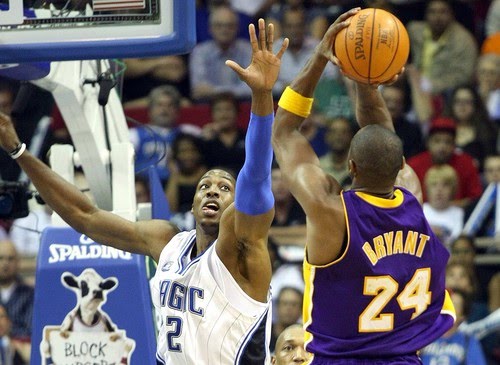
Good story on espn.com about Kevin Durant being a major player on the USA team this summer. He offers up a good quote about the impression Kobe Bryant made on him during Team USA tryouts back in 2008:

Some of the roots of what made Durant such an efficient scoring machine can be traced back to the summer of 2008 when he was trying to make the roster for Beijing and the team was given a day off in Las Vegas.

We'll let Durant pick up the story from there.

"We had the day off, but they said we could get some shots up if we wanted, so I decided to head over with [Oklahoma City teammate and Team USA hopeful] Jeff Green.

"Kobe [Bryant] was the only guy on the bus, and that spoke volumes to me -- he's the best player in the game, yet he's always willing to come work on his game, so that kind of motivated me and Jeff," Durant said. "He went by himself, he got a lot of shots up, and by the time he was done you could see he had gotten better over that hour. Like I said, it was a big inspiration to me and Jeff."

Tuesday, July 20, 2010

Roy Has it Figured Out

Great article here from Sports Illustrated on the work ethic and preparation of Phillies ace pitcher Roy Halladay. Here is a little from the article on his relentless work ethic:

Roy Halladay is the Lance Armstrong of pitchers. His capacity for work—both his physical endurance and his obsessive need to train his body—is freakish. Before the Phillies were required to be on the field this spring, Halladay had already worked out for 90 minutes nonstop: lifting weights, fielding a multisided rubber reaction ball, sliding laterally on a slide board, using the elliptical machine, running on the treadmill, pulling on rubber tubing and tackling other assorted exercises, capped off by stretching and then soaking in metal tubs, alternating between 110° water and 50° water to open and close his blood vessels, which helps his body recover more efficiently. In Toronto many of his teammates tried the lower-body regimen Halladay does on the day after starts. "None of them made it halfway," says former Blue Jays pitching coach Brad Arnsberg.

Roy Halladay is the Peyton Manning of pitchers. "That's what I call him," says Yankees starter A.J. Burnett, a former Toronto teammate. "No one is more prepared."

Halladay sums up his preparation:

Halladay controls as much as he can, including his own body. He takes the ball knowing that he has run not one less mile, done not one less repetition of a leg press or worked out for not one day less than what he planned to do. Halladay takes off only two weeks out of the year, in October. When he works out he never allows his heart rate to drop. Instead of resting between sets he jumps on a treadmill or mixes in another exercise. One reason he likes to train before anyone else arrives is that he never has to wait for a piece of equipment.

"Everybody always talks about the workouts," he says, "but I really don't do anything different. I just try to be more consistent and pay more attention to detail. I do it every day. And if it's 15 reps, I do 15. Not 12 or 13."

Halladay also worked with a sports psychologist:

And that's when I saw the biggest difference," Halladay says. "The first part was trying to rebuild that confidence, having a positive mentality. The second part was to simplify things. Sometimes you get caught up in the big picture—the seven innings, the three runs or less, who you're facing—and you get away from what makes you successful, which is executing pitches.

"Knowing when I go into a game that I had prepared the best I possibly could was a way to help build confidence. I didn't always need success on the field to feel like I was going to be good. I felt like I could create that on my own the way I prepared."

Says Brandy (His wife), " Roy was taught to focus on one thing at a time. When he gave up a hit, he learned to think about the next hitter.

Monday, July 5, 2010

Coach K on Getting Better


Thanks to DECA guru Coach Penas for sending out this Coach K quote!

"I'm on to the next thing, and the next thing is getting better as a basketball coach," Krzyzewski said Monday during his annual midsummer news conference. "You've got to get better each year, so the opportunity to coach the United States gives me an opportunity to get better. I'll coach this summer more than anybody in the United States.
"As long as I take my breaks and stay fresh, I think that's a good thing," he added. "You would want the guy defending you [in a courtroom] to get better in law. You would want the guy or woman treating you in health to keep up to date, and I think as long as you're in any profession, you should get better, because it's constantly changing."

Wednesday, June 30, 2010

Evan Longoria provides needed leadership for Tampa Bay Rays


This is his town, and this is his time.
Soon, if it has not happened already, this may be his team.
Watch Evan Longoria bounce across a baseball field, and you get the feeling he is trying to cram two hours' worth of work into an hour's worth of drill work. It is late afternoon, and the Rays are in the middle of baseball's version of laying bricks, and Longo seems to be taking it seriously.
He scurries across the field as if he is perpetually supposed to be somewhere else, like a cat that is suddenly aware it is in the wrong room. He moves as if the boss is watching him, which, of course, he probably is. Everyone else, too.
By now, the world is on to the size of Longoria's talent. Great bat. Great glove. Great sense of timing.
As it turns out, Longoria is on his way to being a great leader, too.
"Evan resonates leadership qualities," said teammate Gabe Kapler. "It isn't just that he has them, because a lot of guys have them. But when those qualities seep out of your pores and everyone can feel it, that's when it sets guys apart."
Already, his teammates have noticed the way Longoria works. It is enough to make the veterans nod. Even better, it is enough to make the youngsters follow. And when you think about it, what Rays player would you rather have a rookie try to emulate?
Among the hidden factors in the Rays' uncanny 17-5 start to this season is this: The leadership is improved over last year. Manager Joe Maddon prefers to say last year's team was in "leader­ship transition" rather than lacking leadership, but it ends up to the same thing.
This year, there has been a lot of leadership. Maddon says Longoria is a better leader. Carl Crawford, too. And James Shields. And Dan Wheeler. And Gabe Kapler. And Carlos Peña. Oh, and did he mention Longo? Yeah, Longo.
"To me, leadership is giving of yourself," Maddon said. "Too many times, players get greedy and think it's only about them to the point they have nothing else to give to anyone else. I think a real leader always has something left over for someone else."
It is important to Longoria, this leadership role. He is only 24 years old, not exactly grizzled, hardly finished with his own growth. Still, he understands the need for leadership. And he doesn't shy away from the assumption of it.
"It's important to me to have my teammates respect me," Longoria said. "It's not about what you say. It's about what you do. Whether I'm struggling or not, whether things are going well or not, I have to take things in perspective and do all the things I would want to see a teammate do. Run balls out hard. Make good turns. Carry myself on the field."
We have the wrong idea about sports leadership, most of us. Maybe it comes from watching Bull Durham too many times. We think leaders are the guys dressing down the slackers in the locker room or delivering the speeches that have been stolen from Braveheart.
Most of the time, it has nothing to do with that. It has more to do with putting in the right work and setting the proper pace. If there is anything vocal about it, it has more to do with saying the right thing at the right time to the right person. Also, three-run homers help.
"Ultimately, it tends to be the guys who play really well," Ben Zobrist said. "Longo is one of those guys everyone looks to do something special."
Forget Longoria's age. Kapler likes what he sees in Longoria's approach.
"He exemplifies what a professional is, what we all aspire to be," Kapler said. "He cares about this team. He cares about being a great player. He cares about winning. He brings an energy. He wants to be on the field for every inning of every game. He always wants to be in the lineup, To me, leadership is about walking the walk. It has nothing to do with what you say. There are plenty of people with something to say, but you have to be able to do what you're talking about consistently. We follow those who take actions. Any motivational speaker could stand up in front of the clubhouse, but that doesn't make him the leader of a clubhouse. The Rays could hire a motivational speaker to fire you up, and you'd be fired up, but it wouldn't last long."

Monday, June 21, 2010

Monday, June 14, 2010

Izzo Quote


"Learn to listen, listen to Learn"
-Tom Izzo

Friday, June 11, 2010

Kobe Wanting to Be Coached


When Chuck Person arrived in Los Angeles for training camp, he had never before said a word to Bryant. Person, a former Pacers and Kings assistant, was hired by the Lakers as a special assistant because of his close relationship with the newly acquired Ron Artest. The Lakers wanted somebody to help Artest with his transition. They did not need anybody to help Bryant with his shooting. But Person, who spent 13 years stretching NBA defenses, had studied Bryant's stroke from afar, marveling at his footwork, his vertical leap, his power of separation. "There was just one thing," Person says, "that I felt I could enhance."
A young player is taught, from the time he can lift the ball overhead, to finish the shot with his index finger pointed at the ground. "Kobe was following through with so much of the index that the ball was turning ever so slightly off that finger and he was getting a little sidespin," Person says. "When he wasn't right on, the ball would roll off the rim." Person believed he could help Bryant, but he had to be tactful about it. He could not just walk up to one of the best scorers ever and tinker with his shot. He needed an opening.

On Dec. 11 Los Angeles played the Timberwolves, and point guard Jordan Farmar made a lazy pass to Bryant at the three-point line. Timberwolves forward Corey Brewer lunged for it, deflecting the ball off Bryant's right index finger. Told he had an avulsion fracture, Bryant refused to sit out, and the next night in Utah he missed 17 of 24 shots, including eight of nine three-pointers. The time was right for Person. He approached Bryant and explained that he too had suffered an avulsion fracture in his index finger, with Indiana in 1991. He also told Bryant that the injury presented an opportunity.
"I asked him for his trust," Person says, "and I told him that we should start working together. He didn't argue with me. He bought in right away." Person wanted Bryant to put more pressure on the middle and ring fingers in his release, creating more backspin and friendlier rolls off the rim. The pad Bryant had to wear on the index finger would force him to concentrate on the other two.
The day after the Utah game, Bryant and Person convened early at the Lakers' training facility and shot for one hour before practice. The next day they did the same. Then they flew to Chicago and worked out that night at the United Center. During a break Bryant asked Person, "Did you ever score 40 points with your finger this way?" Person said he did. For Bryant it was a rare moment of self-doubt, and then it was gone. "I'm going to get 50," he said. They arrived at the United Center early the next morning for a shootaround, stayed late, and that night Bryant lit up the Bulls for 42 points on 15-of-26 shooting. A day later he scored 39 in Milwaukee, with a game-winner at the buzzer.
Penetrating Bryant's circle is not easy, but Person had a way in. As a freshman at Brantley (Ala.) High School 31 years ago, Person attended a summer basketball camp at Auburn University. The guest counselor was Jerry West, who as the Lakers executive vice president would bring Bryant from high school to Los Angeles 17 years later. "All the things I told Kobe," Person says, "are things Jerry West told me at that camp." Person persuaded Bryant to raise the ball straight into his shot instead of holding it for a moment at his hip, which has quickened his release; lift his right elbow from nose level to forehead level, which has heightened his arc; and keep that elbow pointed at the basket no matter how his body is contorted. "If you saw a tape of him shooting six months ago," Person says, "it would look completely different."
Many in the organization did not understand why Bryant insisted on playing with the broken finger. He could afford to take time off in December; they needed him healthy in June. As it turned out, playing in December is exactly what prepared Bryant for June. He spent the regular season refashioning his shot in time for the playoffs. The transition was not always easy—his field goal percentage, free throw percentage and three-point percentage all dipped as Person's tinkering intensified—but it was necessary. Although the fracture has healed, Bryant was left with an arthritic knuckle on his index finger that is swollen and painful but appears to affect him not at all. "It's almost helped to some degree," says Lakers shooting coach Craig Hodges. "at the net when Kobe shoots now. The ball sinks to the bottom, and 'Pow!' It pops up. That's the backspin he's getting from the middle finger." The index finger is just supposed to hold the ball. The middle finger is supposed to do the work.
Bryant's longevity is a by-product of the many subtle adjustments he has made over the years, starting in 1999, when he broke his right hand and spent all of training camp developing his left. Back then, defenders would dare Bryant to shoot from outside, an unfathomable strategy today. They also tried to lock him up in the post, equally unthinkable. "I don't know any better post player in the game now," West says. Next up for Bryant, says Lakers assistant Jim Cleamons, "he will learn to come off screens so the ball will work for him and he won't have to beat everybody." Bryant's endless improvements require a kind of humility, the best player in the game forever open to the idea that he can get better.

Monday, June 7, 2010

Manuel’s Positive Energy Ignites Mets


From the NY Times:
Of all the strategic decisions a manager makes over the course of a game, whether calling for a pitching change, switching a defensive alignment or ordering an unexpected dash on the basepaths, there are also the less-nuanced motivational tools to employ.
For Jerry Manuel, who has operated all season under the public scrutiny regarding his job security, pushing his players’ emotional buttons may be his greatest strength.
In the Mets’ 7-6 victory over the Florida Marlins on Sunday, Manuel’s positive outlook was cited as one of the reasons for a triumph that extended their home winning streak to eight games. Manuel has faced some withering criticism this season, but he has also provided some evidence of a job well done, and players were quick to note how Sunday offered a strong case.
With the Mets trailing by 5-0 in the sixth inning, Manuel refused to allow his players the luxury of conceding the game, even though they had overcome that large a deficit only once this season. And even though they had only eight outs left, Manuel remained vocally enthusiastic in the dugout. Apparently, it had an effect.
“I give Jerry credit on that one,” Jeff Francoeur said, “because he was in the dugout cheering us on: ‘Let’s go, let’s go, let’s go.’ ”
But other players, too, have noted how Manuel, despite the pressure he has worked under this season, has never changed his upbeat approach. Whether it is the unusual step of calling the entire team into his office back in May to urge it to stick together, or cheering on his players in the dugout, his upbeat vibe has taken root.
“He’s by far the most positive guy I’ve ever played for,” the first-year Met Jason Bay said, “and I don’t care if you’re playing Little League or major league baseball, positivity goes a long way. It tends to be contagious. That’s no slight to anybody else. That’s just, given the market, the uncertainties, the ups and downs we’ve gone through.
He’s never wavered on his stance of being positive and standing behind guys. I know it’s easy to get caught up in certain things, but he hasn’t. He’s really been the same guy to us, from spring training until now, and I understand how difficult that is and I respect that.”

Saturday, June 5, 2010

Woodenisms

The life lessons taught by John Wooden have become legend. Here's a collection of some of the greatest "Woodenisms."

"Things turn out best for the people who make the best of the way things turn out."

"Never mistake activity for achievement."

"Adversity is the state in which man mostly easily becomes acquainted with himself, being especially free of admirers then."

"Be more concerned with your character than your reputation, because your character is what you really are, while your reputation is merely what others think you are."

"Be prepared and be honest."

"You can't let praise or criticism get to you. It's a weakness to get caught up in either one."

"You can't live a perfect day without doing something for someone who will never be able to repay you."

"What you are as a person is far more important that what you are as a basketball player."

"Winning takes talent, to repeat takes character."

"A coach is someone who can give correction without causing resentment."

"I'd rather have a lot of talent and a little experience than a lot of experience and a little talent."

"If you don't have time to do it right, when will you have time to do it over?"

"If you're not making mistakes, then you're not doing anything. I'm positive that a doer makes mistakes."

"It isn't what you do, but how you do it."

"Ability is a poor man's wealth."

"Failure is not fatal, but failure to change might be."

"Consider the rights of others before your own feelings, and the feelings of others before your own rights."

"Do not let what you cannot do interfere with what you can do."

"Don't measure yourself by what you have accomplished, but by what you should have accomplished with your ability."

"It's not so important who starts the game but who finishes it."

"It's what you learn after you know it all that counts."

"It's the little details that are vital. Little things make big things happen."

"Talent is God given. Be humble. Fame is man-given. Be grateful. Conceit is self-given. Be careful."

"The main ingredient of stardom is the rest of the team."

"Success comes from knowing that you did your best to become the best that you are capable of becoming."

"Success is never final, failure is never fatal. It's courage that counts."

Source: CoachWooden.com

Sunday, May 30, 2010

It's all in the Preparation


Phillies pitcher Roy Halladay threw a perfect game last night which is only the 20th in MLB history. The work that Halladay puts in to get ready for each start is easily regarded as the toughest, most disciplined regimen for any pitcher. Less than 12 hours after completing history, Halladay was back at the ballpark, beating everyone of his teammates there. "Journey's always better than the destination," Halladay said. Here is a little from Jayson Stark of espn.com:
I got to talking about Halladay one day this spring with a former teammate of his in Toronto, Jason Frasor. And I found myself thinking Saturday about something Frasor said that day.
Some men, Frasor said, prepare to pitch.
And some men, he said, prepare to win.
But "Doc," Frasor said, "prepares to dominate."
And that's just about all Halladay has done since the day he reappeared in the big leagues in 2002, after that infamous detour to the Florida State League in 2001. He leads the majors in wins (137), innings pitched (1,796 1/3) and complete games (51) since then. He's second in winning percentage (.688) and ERA (3.08).
And none of that happened by accident. It happened because all this man has done since is embarked upon the pursuit of greatness.
You find him in the workout room hours before dawn on every spring training morning. You'll have to wait for 45 minutes to talk to him after every regular-season start, because there is no chance -- none -- he'd skip his mandatory post-pitching workout, even after a perfect game.
"I used to think I got to the park early," Phillies hitting coach Milt Thompson said of Halladay this spring. "But I get here at 6:15 [a.m.], and he's already on his second shirt."

Monday, May 24, 2010

Thursday, May 20, 2010

Lou Holtz Game Plan

1. Maintain a positive attitude.
2. Welcome adversity as a learning experience.
3. Act boldly; go for the big play when you’re behind.
4. Review your fundamentals; eliminate any shortcuts.
5. Think WIN!
6. Adapt to change.
7. Give your best effort at all times.
8. Willingly make the sacrifices that winning demands.
9. Consider both sides of your three questions.
10. Remind yourself that the difference between champ and chump is U.

Friday, May 7, 2010

Thursday, April 29, 2010

Manu Ginobili plays with reckless fire, energizes Spurs


Spurs guard Manu Ginobili is the heart and soul of the Spurs drive for another championship. Ginobili displayed his toughness in Game 3 against Dallas when he suffered a broken nose and returned to action five minutes later. Says Coach Popovich:

"Those are the players who you know are really special. Every team has to have some of those. We're fortunate Manu's on our team."

Popovich called him a great competitor after he scored 11 of his 15 points in the fourth quarter of Game 3 with a broken nose. What makes his competitiveness different from other players?
"That's hard to articulate," Popovich says. "It's just something that shows in a variety of situations. They do things in certain moments of the game. ... Their understanding of what's going on and their drive to do what most players wouldn't even dream of makes them different.

"He's angular and almost looks helter-skelter, but it's helter-skelter with a purpose and a plan. He combines some incredible ball skills with great desire, great passion and an unbelievable will to win, and that's what makes him special."

Monday, April 26, 2010

Everything they do, they compete

Florida head coach Urban Meyer visited Patriots minicamp last year and came away with a strong liking of how the Patriots go about their business:

"The last practice- this is before they go on vacation- they did a two-minute drill and it was Tom Brady against the first-team defense," Meyer said. "And they scored right at the end. It was in shorts, and it was like they won the Super Bowl. They're all jumping around, and I'm thinking, 'Now I know why. Everything they do, they compete.' Someone says that about Florida and we're in good shape."

Friday, April 23, 2010

Preparation

"When you know you have not cheated in your preparation, it makes you mentally tough."

-Bill Parcells

Thursday, April 22, 2010

Nothing reserved about Lakers' Powell

Great story on espn.com about Lakers reserve forward Josh Powell (pictured left). Powell has not played very much this year but when his number is called he is always ready to go. Teammates love his preparation and attitude in practice. Here are some excerpts from the article:

Now in his second season with the Lakers after spending the first three years of his career with four different teams, Powell has carved out a niche in Los Angeles as a vocal leader even though he is the ninth or 10th man in coach Phil Jackson's regular eight-man rotation.

In his short time with the Lakers, he's become fast friends with Bryant, who can just about count on one hand the amount of teammates he considers personal friends in his 14 seasons in the league.

"We both have a passion to work hard and to practice hard," Bryant said. "I think it started there and it grew from there."

Said Powell: "It's great. I think the biggest thing why we are close is because the hunger and the passion for the game that me and him both have. Granted, the skill level might be different, but you can't -- as far as heart and desire and things like that -- like, I'm up there. And everybody knows that. People can look at that and be like, 'That's my guy.'"

Bryant isn't just about practice, however. He's about performance. And he knows that Powell is capable of helping the team win ballgames.

"He has so much talent," Bryant said. "He can help us out so much. It's just that this team has so much depth. Every time he's had an opportunity to step in and perform, he's performed extremely well. Last year when Lamar [Odom] was out for a stretch, he stepped in in Houston and had a huge game, stepped in in San Antonio and had a huge game. He's extremely professional. Doesn't complain. Doesn't whine. He just comes out and works hard every day."

According to Powell, he doesn't give 100 percent or 110 percent, he gives "200 percent." It's that drive that turned him from a player whose framed portrait in the Lakers' practice facility shows him making a pass around Utah's Kyrylo Fesenko -- scrub against scrub in meaningless minutes -- to a player whose first career 3-pointer came in Game 1 of the 2009 NBA Finals.

"I think it's good for guys to watch," Bryant said. "Jordan [Farmar] and Shannon [Brown] and some of the other guys, because Josh is always ready. His number's not called. He can easily be playing, but most of the time his number's not called. When it is called, he's ready to go."

Powell hasn't been used as much this season as he was last season. His minutes have dipped from 11.7 to 8.7 per game and along with the decrease in playing time his points and rebounds per game have trended down from 4.2 and 2.9 per game, respectively, to 2.6 and 1.7.

While the numbers don't support it, Powell is just as important to the team and he's improving as a player.

"He's amazing," Odom said. "His work ethic, his persistence doesn't go unnoticed. It's too bad that he can't … that you guys don't really get to see it. We see it every morning. He's amazing.

"His skill level is high. He's gotten better even handling the ball and his range is all the way out to the 3-point range. He's in shape. He's a pro, man."

Bryant and Derek Fisher are the Lakers' official co-captains, but Powell takes on a distinct leadership role of his own.

"I think [he's a leader] because of how he carries himself, what he does and what he brings to us in practice," Odom said. "At 10 in the morning, when some guys are tired, Josh will wake your butt up. Because he will ram you. He will make the extra effort to go get the offensive rebound and so on and so on. He's going to get his. I can't wait to see it."